
Álvaro García
Ruminant nutrition is fundamentally governed by the activity of a highly specialized microbial ecosystem residing in the rumen. Through microbial fermentation, feeds are converted into volatile fatty acids (VFAs), microbial protein, and fermentation gases, thereby supporting host metabolism, growth, and production. While nutritional evaluation frequently focuses on individual feed characteristics, practical diets invariably consist of combinations of ingredients whose biological responses are not always predictable from isolated feed values.
The integration of multiple dietary components generates associative effects that may deviate from simple summation. These responses arise from shifts in substrate availability, microbial competition, fermentation kinetics, and ruminal physicochemical conditions. Consequently, understanding feed interactions is essential for designing diets that maximize performance, improve nutrient efficiency, and sustain rumen stability.
The complexity of these responses can be organized within a conceptual framework describing additive, substitution, and potentiating interactions (Figure 1).
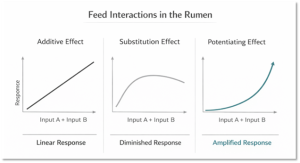
Figure 1. Conceptual representation of feed interaction responses in the rumen
The diagram illustrates three fundamental interaction patterns observed when combining feeds or additives in ruminant diets. Additive effects produce a linear response in which the combined outcome equals the sum of individual contributions. Substitution effects generate a diminished response, reflecting negative associative interactions that reduce intake, digestibility, or fermentative efficiency. Potentiating effects yield an amplified response, where complementary mechanisms enhance microbial activity, nutrient utilization, or rumen stability beyond additive expectations.
Conceptual framework of feed interactions
Feed interactions describe the biological responses that emerge when dietary components influence each other’s utilization within the rumen. These responses represent a continuum governed by mechanistic processes affecting microbial metabolism, intake regulation, and fermentation dynamics. Although classified into additive, substitution, and potentiating patterns, these interaction types frequently coexist within practical feeding systems.
Additive effects
Additive responses occur when dietary components function independently within the rumen environment. In this scenario, each feed provides substrates or regulatory stimuli that do not interfere with the utilization of other components, resulting in outcomes consistent with cumulative expectations.
Combining corn grain with alfalfa hay often exemplifies additive behavior. Corn grain supplies rapidly fermentable starch, while alfalfa hay contributes structural fiber and degradable protein. Under stable ruminal conditions, microbial populations effectively ferment both substrates without substantial antagonism. Additive effects are most observed when dietary components complement rather than compete with each other’s primary functions.
Example: “In mixtures of tropical grass and grain, the response for dry matter digestibility was similar to the predicted mean of individual components, indicating minimal associative interaction under these conditions.” (See page 765 of Dixon and Stockdale 1999). This describes a neutral expected outcome where the measured response of the combination aligns with the sum of its parts, evidence of an additive effect.
Substitution effects
Substitution effects arise when the inclusion of one dietary component reduces the intake, digestibility, or metabolic effectiveness of another. These responses reflect negative associative interactions mediated by both physicochemical and regulatory mechanisms.
Supplementation of forage-based diets with important levels of rapidly fermentable carbohydrates represents a classical example. Increased acid production may depress rumen pH, suppress fiber-digesting microbial populations, and reduce forage utilization. In other contexts, energy-dense concentrates may reduce structural feed intake through metabolic feedback signals or physical intake regulation.
Such interactions demonstrate that increases in nutrient density do not necessarily translate into proportional improvements in animal performance.
Example: “Across all levels of concentrate supplementation, pasture intake declined significantly such that total dry matter intake increased less than predicted from the concentrate offered alone … indicating a substitution rate of 0.75 kg pasture displaced per kg concentrate consumed.” (See Table 3 and accompanying text in Stockdale 2000). This is a clear quantitative substitution effect, when concentrate increases, pasture intake drops, and total intake is less than expected.
Potentiating effects
Potentiating effects describe responses in which feed combinations produce outcomes exceeding additive expectations. These interactions typically arise from complementary mechanisms that enhance microbial efficiency, fermentation stability, or nutrient utilization.
Rumen-protected fats provide a representative example. By supplying additional energy without disrupting fermentation, they allow fiber digestion to proceed efficiently while improving overall energy supply. Similarly, combinations of microbial modulators and buffering agents may enhance fermentation stability and digestion through synergistic regulatory pathways.
Potentiating interactions underscore the importance of mechanistic complementarity rather than simple nutrient contribution.
Example: “Rumen supplementation with Saccharomyces cerevisiae was associated with increases in ruminal pH, cellulolytic activity, and fiber digestibility that exceeded the additive predictions based on control and individual treatment outcomes.” (Abstract and Results section of Desnoyers et al. 2009). That wording directly supports a potentiating interaction, the combined effects on rumen fermentation exceed the additive baseline.
Biological basis of feed interactions
Feed interactions in the rumen are governed by integrated biological processes involving substrate characteristics, microbial ecology, fermentation kinetics, and ruminal regulatory conditions. Substrate degradation rates influence fermentation dynamics, while microbial competition shapes nutrient utilization efficiency.
Rumen pH, retention time, and intake patterns function as central regulators integrating these mechanisms. Consequently, associative responses reflect system-level regulation rather than isolated nutrient effects.
Effective diet formulation requires recognition that feeds do not function independently. Nutritional strategies must account for associative effects influencing intake, digestibility, fermentation stability, and metabolic efficiency. Anticipating substitution effects and exploiting potentiating interactions represent critical opportunities for improving efficiency and production outcomes.
Conclusions
Rumen responses to dietary combinations are shaped by complex biological interactions rather than simple nutrient summation. Additive, substitution, and potentiating effects represent mechanistic outcomes emerging from shifts in microbial activity, substrate utilization, and ruminal regulation. Recognizing these associative dynamics is essential for optimizing animal performance, enhancing feed efficiency, and sustaining rumen stability.
The full list of references used in this article is available upon request.
© 2026 Dellait Knowledge Center. All Rights Reserved.