
Álvaro García
Many dairy farms unknowingly leave a portion of the ration just out of reach of their cows. As cows eat, they naturally push feed away from the feed barrier with their noses. Over time the total mixed ration (TMR) gradually drifts away from the bunk edge, leaving a portion of the feed difficult to reach even though it is still present in the feed alley. When this happens, cows often stop eating sooner than they otherwise would, reducing feeding activity and potentially limiting dry matter intake.
In modern dairy housing systems, most cows are fed along a feed apron or feed table, a long concrete alley where the TMR is delivered and cows access the feed through headlocks or feed rails. In older facilities, feed was commonly delivered directly into raised feed bunks, which physically contained the ration. On feed aprons, however, the ration sits on a flat surface, allowing it to gradually move away from the cow as she eats.
As cows consume the ration, they naturally push feed forward while sorting and selecting particles. Over time this behavior causes the TMR to drift away from the feed barrier. Research on dairy cow feeding mechanics shows that when feed drifts farther from the feed barrier, cows must extend their necks and shift their body weight forward to reach it. As this distance increases, feeding becomes progressively more difficult and cows often stop eating even though feed remains in the alley. Feed push-ups, periodically moving feed back toward the feed barrier, restore feed accessibility and encourage cows to return to the bunk and resume eating. While the task seems simple, its effects on cow behavior, dry matter intake, and milk production can be surprisingly significant.
Why feed push-ups stimulate cows to eat
The effectiveness of feed push-ups is rooted in the interaction between cow feeding behavior, social dynamics at the feed bunk, and the physiological regulation of appetite in ruminants. Dairy cows typically consume their daily ration in 9 to 14 meals, spending about 4 to 6 hours eating. The largest feeding bout usually occurs immediately after milking or fresh feed delivery. During these periods cows compete for space at the feed bunk and often push feed forward while eating. Over time, this natural behavior gradually moves the ration out of the cow’s comfortable reach.
As feed drifts away from the feed barrier, cows must extend their necks and shift their shoulders forward to access it. This posture is inefficient to maintain for prolonged periods, and many cows stop eating even though feed technically remains available. Feed push-ups restore the ration to the cow’s natural feeding zone, making it easier to grasp feed with the tongue and muzzle. Simply improving feed accessibility often prompts cows to resume eating.
But accessibility is not the only reason feed push-ups stimulate feeding. The movement of the feed itself also acts as a behavioral cue. Cattle are highly responsive to disturbances at the feed bunk, and when feed is pushed closer to the barrier cows often return to eat within minutes. In behavioral terms, a feed push-up acts as a secondary feeding stimulus, like the signal cows receive when fresh feed is delivered.
A comparable response occurs in grazing systems when the hot wire is advanced during rotational grazing. Even when grazeable forage remains in the previous strip, cattle typically move quickly to the newly allocated area and begin grazing. The exposure of fresh forage triggers exploratory feeding behavior, much like the disturbance created when feed is pushed closer in a TMR feeding system.
Feed push-ups also help mitigate social competition at the bunk. Dairy cows establish clear hierarchies, and dominant animals often control the most desirable feeding spaces. When feed drifts away from the barrier, dominant cows may still reach it, while subordinate cows cannot. By redistributing feed along the bunk, regular push-ups improve access across the herd. In practical terms, this encourages more frequent meals and can increase total daily dry matter intake.
From biology to economics
Milk production in dairy cows is linked to dry matter intake (DMI). In high-producing cows, each additional kilogram of DMI can support 1.8–2.5 kg (4.0–5.5 lb.) of milk, depending on diet composition and stage of lactation.
Because feed push-ups encourage cows to return to the bunk and initiate additional feeding bouts, they can increase daily intake and milk yield. The key question for producers, however, is straightforward: Does the additional milk produced justify the labor or equipment required to push feed?
Several studies have evaluated the impact of feed push-up frequency on dairy cow performance.
For example, Havrdová et al. (2023) reported that increasing feed push-ups from two to six times over a 12-hour period increased milk production from 24.5 kg (54.0 lb.) to 26.0 kg (57.3 lb.) per cow per day, a gain of approximately 1.6 kg (3.5 lb.) of milk per cow daily.
Additional research shows that more frequent feed push-ups can:
- Improve feed intake consistency
- Reduce feed sorting, particularly of long fiber particles
- Improve access to feed for subordinate cows
- Promote more stable rumen fermentation
Several behavioral studies have also shown that feed push-ups can increase feeding activity and dry matter intake. When feed is pushed closer to the feed barrier, cows frequently return to the bunk and initiate additional feeding bouts, particularly in the first few minutes following the disturbance. Even small increases in daily dry matter intake can translate into measurable gains in milk production. Under typical conditions, each additional kilogram of dry matter intake can support 1.8–2.5 kg (4.0–5.5 lb.) of milk, depending on diet composition, forage quality, and stage of lactation. As a result, management practices that stimulate feeding behavior, such as regular feed push-ups, can generate measurable improvements in milk yield.
Quantifying the economic impact
To estimate the potential value of feed push-ups, consider the following conservative assumptions:
- Milk response: 1.0 kg (2.2 lb.) milk per cow per day
- Milk price: €0.45/kg (€0.20/lb.)
- Herd size: 150 cows
Additional Milk Production
Additional milk produced per day:
- 150 cows × 1.0 kg (2.2 lb.) = 150 kg (331 lb) of milk per day
Additional milk revenue:
- 150 kg × €0.45 = €67.50 ($73.60) per day
Annual revenue increase:
- €67.50 × 365 = €24,638 ($26,850) per year
Even if the response were only 0.5 kg (1.1 lb.) per cow per day, the additional revenue would still reach:
€12,319 ($13,425) per year
Cost of manual feed push-ups
Manual push-ups typically require:
- 5–10 minutes per push-up
- 3–5 push-ups per day
Assuming 5 push-ups per day at 7 minutes each, the total time required is:
- 35 minutes/day = 0.58 hours
Assuming a labor cost of €15/hour ($16.35/hour):
- Daily labor cost:
- 58 × €15 = €8.75 ($9.54) per day
- Annual labor cost:
- €8.75 × 365 = €3,194 ($3,480) per year
Net Economic Benefit
- Under the conservative scenario of 1.0 kg (2.2 lb.) additional milk per cow per day:
- Additional milk revenue:
€24,638 ($26,850) per year - Labor cost:
€3,194 ($3,480) per year - Net annual benefit: €21,444 ($23,370)
- Additional milk revenue:
- Even with only 0.5 kg (1.1 lb.) additional milk per cow per day, the practice still generates:
- Net annual benefit: €9,125 ($9,945)
Comparing push-up methods
While manual push-ups require little capital investment, many farms use mechanized or automated systems to reduce labor requirements.
Manual push-ups
Time requirement: 35 minutes/day
Annual labor cost: €3,194 ($3,480)
Net annual benefit (1 kg milk response): €21,444 ($23,370)
Break-even point:
Only 0.13 kg (0.29 lb.) of additional milk per cow per day is required to cover the labor cost.
Tractor-based feed pushers
Many farms use tractor-mounted pushers to move feed along the bunk.
Assumptions
Capital cost: €25,000 ($27,200)
Fuel and maintenance: €1,500 ($1,630) per year.
Depreciation (10 years):
€25,000 ÷ 10 = €2,500 ($2,720) per year
Total annual cost: €2,500 + €1,500 = €4,000 ($4,350) per year
Net annual benefit: €24,638 − €4,000 = €20,638 ($22,500)
Automated feed push robots
Automated push robots can perform push-ups throughout the day with minimal labor.
Assumptions
Capital cost: €60,000 ($65,300)
Operating cost: €3,000 ($3,260) per year.
Depreciation (10 years): €6,000 ($6,530) per year
Total annual cost: €9,000 ($9,790) per year
Net annual benefit: €24,638 − €9,000 = €15,638 ($17,060)
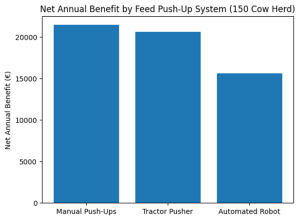
Fig. 1 Net Annual Benefit by Feed Push-Up System
Comparison of ROI between manual push-ups, tractor pushers, and automated robots for a 150-cow herd.
Sensitivity Analysis
System | Additional Milk | Annual Milk Revenue | Annual Cost | Net Benefit |
Manual Push-Ups | 150 kg/day | €24,638 | €3,194 | €21,444 |
Tractor Pusher | 150 kg/day | €24,638 | €4,000 | €20,638 |
Automated Robot | 150 kg/day | €24,638 | €9,000 | €15,638 |
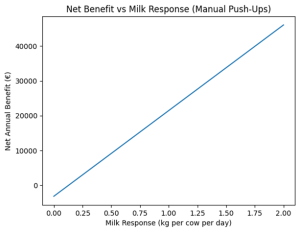
Fig. 2. Net Benefit vs Milk Response (Manual Push-Ups)
Profitability increases as milk response increases. Even small milk responses quickly become profitable.
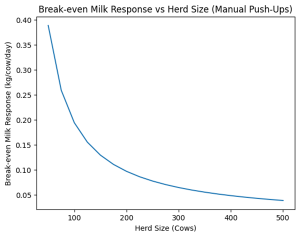
Fig. 3. Break-Even Milk Response vs Herd Size
Larger herds require a smaller milk response to justify manual push-ups.
Conclusion
Feed push-ups are one of the simplest and most cost-effective management practices available to dairy producers.
By improving feed accessibility, stimulating feeding behavior, and promoting more consistent rumen fermentation, push-ups encourage cows to eat more frequently and increase dry matter intake. Even modest increases in intake can translate into meaningful gains in milk production.
From an economic perspective, manual feed push-ups often provide the highest return on investment, requiring minimal cost while delivering substantial production benefits.
Tractor-based systems and automated robots can also generate positive returns, particularly on larger farms where labor availability is limited or expensive.
Regardless of the method used, the evidence suggests that regular feed push-ups represent a high-return management practice capable of improving both milk production and overall herd efficiency.
The full list of references used in this article is available upon request.
© 2026 Dellait Knowledge Center. All Rights Reserved.