
Álvaro García
Creating a healthy environment for calves
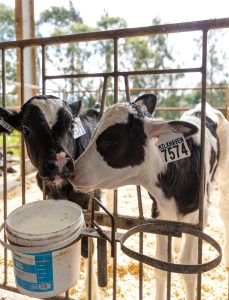
The environment in which dairy calves are raised plays a critical role in their health, welfare, and future productivity. Housing design, ventilation, social interactions, and bedding quality all influence how calves respond to environmental challenges during the preweaning period. While bedding is often viewed primarily as a comfort measure, it is a fundamental component of the calf’s environment that can affect performance and well-being.
Because young calves spend much of their time lying down, bedding directly influences thermoregulation, hygiene, behavior, and overall welfare. An ideal bedding material should provide insulation, absorb moisture, maintain a clean resting area, and support normal resting behavior. However, each bedding option presents trade-offs related to cost, labor, availability, and manure management.
Among the available materials, straw remains the benchmark for young dairy calves. Long straw provides excellent insulation by trapping air and allowing calves to nest. Nesting occurs when calves tuck their legs beneath their bodies, reducing heat loss and improving thermal comfort. Bedding adequacy is often evaluated using a nesting score, with higher scores indicating greater protection from cold stress. Deep straw bedding consistently produces higher nesting scores than wood products or other materials, helping calves conserve energy that can be directed toward growth rather than body temperature maintenance.
Nesting scores provide a practical method for evaluating bedding adequacy. A score of 3 indicates optimal insulation and protection from cold stress, a level most easily achieved with deep straw bedding.
Despite these benefits, straw also presents challenges. Maintaining dry conditions requires regular replenishment, and wet straw can quickly become a source of bacterial contamination. Storage requirements and labor costs may also exceed those associated with other bedding materials.
Wood-based products such as shavings and sawdust are widely used alternatives. These materials are absorbent, comfortable, and easy to manage. Wood shavings often provide a clean resting surface and may require less bedding volume than straw. However, they offer less insulation during cold weather and may not support adequate nesting unless applied in substantial depth. Fine sawdust can also contribute to dust accumulation under dry conditions, potentially affecting respiratory health in poorly ventilated facilities.
Sand is commonly used in dairy facilities because of its excellent drainage characteristics and low bacterial growth. Nevertheless, sand provides little insulation and may increase cold stress during winter months unless supplemented with additional bedding. Furthermore, manure handling and equipment wear can become significant concerns when large quantities of sand are incorporated into waste management systems.
Other bedding materials, including rice hulls, peanut hulls, corn residues, and composted organic products, are often selected based on local availability and economics. Their performance can vary depending on moisture content, particle size and management practices. Consequently, producers should evaluate alternative bedding materials not only by cost but also by their ability to maintain a dry, comfortable environment for calves.
Table 1. Characteristics of common bedding materials used in dairy calf housing.
Bedding |
Insulation |
Moisture absorption |
Nesting ability |
Advantages |
Limitations |
Long straw |
Excellent |
Moderate |
Excellent |
Superior cold-weather comfort |
Higher labor and storage needs |
Wood shavings |
Moderate |
Good |
Moderate |
Comfortable and easy to manage |
Less insulation than straw |
Sawdust |
Moderate |
Excellent |
Limited |
Highly absorbent |
Can increase dust levels |
Sand |
Poor |
Low |
Poor |
Good drainage, lower bacterial growth |
Limited insulation, difficult manure handling |
Rice hulls |
Moderate |
Good |
Moderate |
Often economical and locally available |
Variable performance depending on management |
Regardless of the bedding material selected, management remains the most important factor affecting calf comfort and health. Wet bedding increases conductive heat loss, encourages pathogen growth, and elevates the risk of enteric and respiratory disease. Dry bedding, in contrast, helps calves conserve energy that can then be directed toward growth rather than maintaining body temperature.
Historically, most bedding research has focused on hygiene, moisture retention, bacterial counts, calf comfort, and growth performance. Studies comparing bedding materials have demonstrated that clean, dry, well-managed bedding improves calf health regardless of the specific material used, although straw often provides superior thermal protection under cold conditions. As a result, bedding recommendations have traditionally emphasized cleanliness and insulation rather than physiological responses.
What the new research found
While previous studies established the importance of bedding for calf comfort, behavior, and health, researchers have recently begun exploring whether bedding can also influence physiological processes such as inflammation, oxidative status, and rumen development. Calves frequently consume small amounts of organic bedding, particularly straw, potentially altering rumen fermentation and microbial populations. Bedding may also influence stress, inflammatory responses, and nutrient utilization. These observations have prompted scientists to explore whether bedding can affect calf performance through mechanisms that are not related to environmental comfort.
A recent study published in the Journal of Dairy Science (Tian et al. 2026) provides important new insights into this question. Tian and colleagues evaluated the effects of bedding type and forage provision on growth performance, health indicators, and rumen fermentation in dairy calves. The study compared straw and rice-husk bedding while simultaneously evaluating diets that either included or excluded oat hay supplementation.
Table 2. Key findings from Tian et al. (2026).
Observation |
Results |
Forage supplementation |
Increased feed intake and growth |
Rice-husk bedding |
Lower inflammatory indicators and improved antioxidant status |
Straw bedding |
Higher ruminal pH and improved postweaning gains |
Main conclusion |
Bedding and nutrition interact and influence calf performance |
Calves were monitored from birth through 28 weeks of age, allowing researchers to evaluate both preweaning and postweaning responses. Measurements included feed intake, body weight gain, health parameters, blood biomarkers, and rumen fermentation characteristics.
As expected, forage supplementation improved several performance measures. Calves receiving oat hay consumed more dry matter and exhibited greater growth than calves receiving concentrate alone. These findings align with previous research demonstrating the importance of forage in stimulating rumen development and enhancing digestive function.
More intriguing were the responses associated with bedding type. Whereas previous bedding studies focused on hygiene, moisture management, and calf comfort, the work by Tian and colleagues expanded the discussion by examining physiological responses, inflammation, antioxidant status, and rumen fermentation. Calves housed on rice husks exhibited differences in feed intake patterns and several blood biomarkers associated with inflammation and oxidative status. The authors reported evidence suggesting lower inflammatory responses and improved antioxidant status among calves housed on rice husks compared with those housed on straw.
At the same time, straw bedding produced certain advantages. Calves housed on straw maintained higher ruminal pH values and demonstrated improved average daily gain during portions of the postweaning period. These findings suggest that bedding material may influence digestive physiology in ways that are not yet fully understood and reinforce the concept that the calf environment can interact with nutritional management to affect calf development.
The most important contribution of the study is its demonstration that bedding and nutrition should not be viewed as independent management decisions. Instead, the calf’s environment and feeding program interact to influence growth, health, and rumen development. The biological effects of a bedding material may depend, at least in part, on the nutritional strategy being employed.
Take-home message
For producers, the practical message remains straightforward. Bedding should be selected not only based on cost and convenience but also on its ability to maintain a clean, dry, and comfortable resting environment. Deep straw continues to provide unmatched insulation and nesting opportunities during cold weather, while alternative materials such as rice husks may offer advantages in specific production systems.
The findings from Tian and colleagues remind us that bedding is more than a management detail. In addition to influencing comfort and hygiene, bedding may affect physiological responses, rumen development, and overall calf performance. While further research is needed to clarify the biological mechanisms involved, the study reinforces a broader principle that has emerged repeatedly in calf research: nutrition and environment work together to shape calf health and growth.
Successful calf-rearing programs recognize that housing, bedding, nutrition, and management are interconnected. These recent research findings suggest that bedding is not merely a surface on which calves rest, but an active component of the environment that can influence health, development, and future productivity.
The full list of references used in this article is available upon request.
© 2026 Dellait Knowledge Center. All Rights Reserved.