
Álvaro García
The global wine industry faces a persistent challenge: what to do with the massive volume of by-products left after grape pressing. Each harvest produces massive quantities of grape pomace, the solid residue composed of skins, seeds, pulp, and occasionally stems. This material represents 20 to 25 percent of the total grape weight and is produced in concentrated amounts during the short winemaking season. In many regions, it is discarded in open piles or used as compost, leading to odor problems, nutrient leaching, and methane emissions as it decomposes.
Reusing grape pomace as animal feed offers a solution that aligns with the goals of circular agriculture. By transforming a waste product into a useful resource, both environmental and economic benefits can be realized. Environmentally, this approach closes nutrient loops, reduces the amount of organic waste requiring disposal, and lowers greenhouse gas emissions associated with waste decomposition. It also supports climate-friendly livestock systems since the inclusion of grape pomace in ruminant diets has been shown to reduce methane emissions.
Economically, this practice can create value for two sectors simultaneously. Wineries save on the cost of waste management, while farmers gain access to a low-cost feed ingredient that can partially replace conventional forages or energy sources. Feed costs often represent more than half of total production expenses in dairy and beef systems. When local materials such as grape pomace are available, they can enhance feed autonomy and reduce dependence on imported grains or silages. Furthermore, since pomace is produced near livestock regions in many Mediterranean and New World wine-growing areas, transportation costs can be minimized.
The environmental benefit is also measurable. Studies conducted between 2024 and 2025 show that including grape pomace at moderate levels (typically 10 to 15 percent of dry matter) in dairy cow diets can reduce enteric methane emissions by around ten percent. This is due to the presence of tannins and other polyphenols, which influence rumen microbial activity and suppress methane-producing archaea. In this way, grape pomace becomes not only a feedstuff but also a tool for climate mitigation in livestock production.
Composition and characteristics of grape pomace
Grape pomace, sometimes called grape peel, is a complex material whose composition depends on the grape variety, ripeness, and winemaking process. Red pomace, which has undergone fermentation, contains higher levels of phenolic compounds and less sugar, while white pomace, typically removed before fermentation, contains more residual sugars and moisture. Despite this variability, certain features are consistent across samples.
Nutritionally, grape pomace is rich in structural carbohydrates, with a high proportion of neutral detergent fiber (NDF) and acid detergent fiber (ADF). Crude protein content ranges between 5 and 15 percent of dry matter, depending on the inclusion of seeds and residual pulp. The seeds contribute to a valuable lipid fraction, dominated by unsaturated fatty acids such as oleic, linoleic, and linolenic acids. These compounds can influence the fatty acid composition of meat and milk when incorporated into animal diets.
A particularly interesting aspect of grape pomace is its content of polyphenols and tannins. These plant secondary metabolites have antioxidant and antimicrobial properties that may protect animal tissues from oxidative stress and improve the stability of meat and milk products. However, excessive levels of tannins can bind to proteins and reduce their digestibility, which is why inclusion rates must be monitored.
The main practical limitation of fresh grape pomace is its high moisture content, often exceeding 60 percent. This makes it highly perishable if not stabilized soon after pressing. Without proper preservation, microbial fermentation and mold growth can occur within days. For this reason, effective preservation techniques are essential for transforming grape pomace into a safe and stable feed ingredient.
Preservation and practical use
Several methods have been developed to preserve grape pomace. The most traditional is drying, which reduces moisture to below 10 percent and produces a stable, transportable meal. Sun drying is inexpensive but depends on weather conditions, while mechanical drying ensures consistency but requires energy input. The drying process must be carefully controlled to prevent overheating, which can degrade sensitive compounds such as anthocyanins and vitamin E. Once dried, the material can be ground and incorporated into pelleted feed formulations.
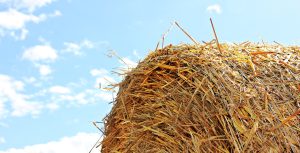
Ensiling has recently emerged as an efficient and low-cost alternative. A 2025 study by Galvez-Lopez and colleagues demonstrated that white grape pomace can be ensiled successfully in large, plastic-wrapped bales. Over a period of 180 days, the silage maintained stable pH, minimal dry-matter losses, and acceptable nutrient composition. The fermentation stabilized within 35 days, producing lactic acid concentrations like those found in conventional maize silage. This finding is important because it provides a practical preservation method that wineries and nearby farms can adopt with minimal infrastructure investment.
Pelleting is another promising approach. By combining dried grape pomace with other ingredients into a uniform feed pellet, the material becomes easier to manage and store, and the risk of selective feeding by animals is reduced. In a controlled trial with Simmental cattle, Teng et al. (2025) used pelleted diets containing up to 20 percent grape pomace and observed positive effects on feed intake and daily weight gain.
For farmers, the choice between drying, ensiling, or pelleting depends on local conditions, available equipment, and intended use. In humid regions, drying may be less practical, whereas ensiling can be performed directly after pressing using common forage-handling machinery. Regardless of the method, monitoring dry matter and ensuring anaerobic conditions during storage are essential to prevent spoilage and mycotoxin formation.
Results from feeding trials
Recent research provides encouraging evidence for the nutritional value and safety of grape pomace in ruminant feeding. The 2025 study by Teng and colleagues investigated the effects of replacing part of the concentrate feed with grape pomace pellets at levels of 0, 15, and 20 percent of the ration’s dry matter. Over 60 days, cattle receiving 20 percent grape pomace showed significantly higher average daily feed intake and weight gain compared with the control group. Interestingly, the fatty acid composition of the muscle changed, showing higher concentrations of oleic and linoleic acids. These unsaturated fatty acids are associated with healthier meat profiles for consumers. The researchers also found no negative impact on rumen fermentation parameters or fungal diversity, indicating that the pomace did not disrupt normal digestive function.
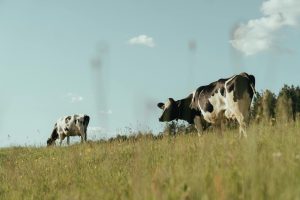
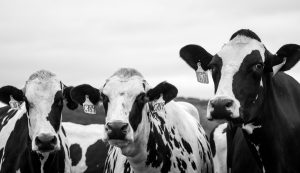
In dairy cows, research led by Akter et al. (2025) evaluated the inclusion of 10 and 15 percent grape pomace in Holstein diets. The study found that while dry matter intake decreased slightly as the pomace level increased, milk yield remained constant. As a result, feed efficiency improved. The cows also emitted less methane, about ten percent less compared to those on the control diet. Milk composition in terms of protein, fat, and lactose was unaffected, but the proportion of polyunsaturated fatty acids in the milk fat increased. These findings confirm that grape pomace can contribute to environmental sustainability without compromising production performance.
Other studies have explored nitrogen metabolism and carcass characteristics. Moderate inclusion levels tend to reduce nitrogen excretion, which can lower ammonia emissions from manure. Trials in finishing cattle have shown that grape pomace may enhance meat oxidative stability due to its antioxidant compounds. This could lead to improved color retention and shelf life of beef, adding value at the processing and retail stages.
The consensus across these studies is that grape pomace can safely replace part of conventional feed ingredients when included at moderate rates, between 10 and 20 percent of the dry matter. At these levels, performance and product quality are maintained or even enhanced. Excessive inclusion, however, may reduce intake or digestibility due to the presence of tannins and lignified fiber.
Practical considerations for farmers
For livestock producers in wine-growing regions, grape pomace represents an opportunity to diversify feed resources and reduce costs. To implement its use effectively, several steps are recommended. First, each batch of pomace should be analyzed for dry matter, crude protein, and fiber content, since these values can vary widely. If the pomace is to be stored as silage, it should be compacted and sealed quickly after delivery from the winery to prevent aerobic spoilage. When drying is used, the material must be protected from rain and rehydration.
During feeding, gradual introduction is advisable. Start with small proportions in the ration and monitor animal behavior, feed intake, and production parameters. For beef cattle, inclusion levels of up to 20 percent dry matter have proven effective, whereas for dairy cows, 10 to 15 percent appears optimal for balancing performance and methane reduction. Diets should be formulated to ensure sufficient energy and protein availability, compensating for the lower digestibility of the pomace fiber.
Economic feasibility depends on transport distance and processing costs. Cooperative arrangements between wineries and livestock producers could reduce planning expenses. In regions where both sectors coexist, mobile ensiling units or shared drying facilities could make this practice more widespread. The benefits, lower feed costs, reduced methane emissions, and valuable use for winery waste, make grape pomace feeding an appealing model of circular agriculture.
Conclusion
The use of grape peels and pomace in cattle feeding embodies the principles of sustainable agriculture. It transforms an abundant by-product into a valuable resource, connects two major agricultural sectors, and supports both environmental and economic goals. Research from 2024 and 2025 shows that when properly preserved and incorporated at moderate levels, grape pomace can sustain or improve animal performance, enhance meat and milk quality, and reduce methane emissions.
As the livestock industry faces growing pressure to reduce its environmental footprint, such innovations demonstrate that sustainability and productivity can coexist. Continued collaboration between researchers, wineries, and farmers will help refine preservation methods, standardize quality assessments, and expand practical knowledge. The adoption of grape pomace feeding could become an integral part of resilient, low-waste agricultural systems, where what was once waste becomes a resource of real value.
The full list of references used in this article is available upon request.
© 2026 Dellait Knowledge Center. All Rights Reserved.