
Álvaro García
Methane emissions from dairy cattle have shifted from a distant environmental concern to a practical issue tied to sustainability metrics, processor expectations, and long-term industry credibility. Methane is a natural byproduct of rumen fermentation, produced when methanogenic microbes use hydrogen generated during fiber digestion. Methane is produced in the rumen by methanogenic archaea, a distinct group of microorganisms that use hydrogen to reduce carbon dioxide into methane. While this process is essential for normal rumen function, methane represents both a potent greenhouse gas and a loss of feed energy that could otherwise support production.
Because methane has a short atmospheric lifetime but a strong warming effect, reducing enteric methane is increasingly viewed as one of the fastest ways agriculture can demonstrate climate progress. For dairy producers, the challenge is finding mitigation strategies that reduce emissions without sacrificing intake, milk yield, or animal health. Nutrition, particularly forage choice, plays a significant role in that equation.
Methane formation in the rumen
During ruminal fermentation, microbes break down carbohydrates into volatile fatty acids that fuel milk production. This process releases hydrogen, which must be removed to keep fermentation moving forward. Methanogenic archaea use hydrogen to reduce carbon dioxide into methane, which is expelled primarily through eructation. Depending on diet and intake level, methane losses can represent 2% to 12% of a cow’s gross energy intake.
From an efficiency standpoint, methane production is therefore not just an environmental issue but also an energy inefficiency. Economics and sustainability analyses highlight that reducing methane yield and intensity in milk production not only contributes to environmental goals but can also support farm profitability by improving feed efficiency and production efficiency on the economics of methane in dairy systems, leading to coin the term “environomics”. These strategies that redirect fermentation toward lower methane output may improve overall system efficiency while delivering environmental benefits.
Under practical grazing conditions, birdsfoot trefoil has been associated with meaningful reductions in enteric methane production. Across animal studies, methane yield (g CH₄ per kg dry matter intake) is typically reduced by 10 to 25%, with most consistent responses in the 12 to 20% range, depending on tannin concentration, intake level, and pasture composition. From an efficiency standpoint, this represents a partial recovery of dietary energy that would otherwise be lost as methane.
Tannins: redefining their role in dairy nutrition
Tannins are plant secondary compounds historically labeled as anti-nutritional because high concentrations can depress intake and digestibility. However, decades of research have demonstrated that moderate levels of condensed tannins can provide functional benefits in ruminant systems.
Condensed tannins influence methane production through several mechanisms. They can suppress rumen protozoa and methanogens, reduce hydrogen availability for methane synthesis, and alter fermentation pathways toward end products that generate less hydrogen. In addition, tannins can improve nitrogen utilization by protecting dietary protein from excessive ruminal degradation.
The key factor is balance. Tannin effects are highly dependent on chemical structure, molecular size, and dose. Excessive tannin intake can reduce performance, while moderate, well-balanced tannins can reduce methane without harming productivity. This distinction explains why not all tannin-containing feeds produce the same results.
Why is birdsfoot trefoil different?
Among tannin-containing forages, birdsfoot trefoil (Lotus corniculatus) occupies a unique position. Unlike high-tannin shrubs or tree leaves, birdsfoot trefoil typically contains moderate concentrations of condensed tannins, sufficient to influence rumen fermentation while maintaining palatability and digestibility.
Birdsfoot trefoil offers several advantages that make it attractive for dairy systems:
- It is a non-bloating legume, allowing safer grazing than alfalfa or some clovers.
- It performs well in temperate regions, including parts of North America, Europe, New Zealand, and southern Australia.
- It can be used as a monoculture or in mixed pastures with grasses and other forages.
Condensed tannin concentrations in birdsfoot trefoil are variable, influenced by cultivar, plant maturity, growing conditions and environmental stress. While this variability complicates management, it also provides opportunities to select cultivars and systems that deliver consistent, moderate tannin intake.
What laboratory studies tell us?
Recent research in vitro has clarified how birdsfoot trefoil tannins influence rumen fermentation. In a 2024 study, German and Finnish researchers evaluated purified tannin extracts from birdsfoot trefoil using an in vitro rumen fermentation system. By isolating tannins from other plant components, the study focused specifically on tannin chemistry and microbial responses.
The results showed that birdsfoot trefoil tannins consistently reduced methane production compared with tannin-free control. Importantly, methane reductions occurred without proportional declines in total gas production, indicating that overall fermentation activity was preserved. This is a critical point, as many methane mitigation strategies reduce emissions primarily by suppressing digestion.
The study also highlighted that tannin structure matters. Birdsfoot trefoil tannins were characterized by moderate molecular size, which may explain why they reduce methane without strongly inhibiting fiber fermentation. These findings help explain why birdsfoot trefoil often perform better than higher-tannin plants in practical feeding situations.
Evidence from animal studies
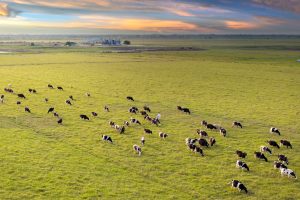
Laboratory findings are only valuable if they translate to real animal situations, and this has been evaluated under grazing conditions. In vivo studies conducted in New Zealand in the early 2000s provide some of the clearest evidence supporting the methane-mitigating potential of birdsfoot trefoil. In controlled grazing experiments conducted in New Zealand, researchers measured methane emissions from sheep and dairy cattle grazing birdsfoot trefoil pastures and compared them with animals grazing conventional grass-based swards. These reductions are attributed to condensed tannins interacting with rumen microbes, combined with the high nutritive value of the forage. Importantly, methane reductions were achieved without major reductions in intake or performance, reinforcing birdsfoot trefoil’s practical relevance. Work published in 2025 profiling environmental variations in condensed tannins across birdsfoot trefoil genotypes in the USA, highlights that tannin concentration and composition vary significantly with location and growing conditions, which may influence the forage’s methane-mitigating potential.
Results vary with pasture composition, intake, and animal species, highlighting that methane mitigation is context-specific. Nevertheless, the consistency between in vitro and in vivo findings strengthens confidence that birdsfoot trefoil can play a meaningful role in methane reduction strategies.
When methane emissions are expressed relative to milk output, the mitigation effect is often greater. Studies reporting methane intensity show reductions of 15 to 30% per unit of milk, reflecting both lower methane yield and maintained or improved animal performance. This distinction is important, as sustainability metrics increasingly focus on emission intensity rather than absolute emissions.
Integrating birdsfoot trefoil into dairy systems
Birdsfoot trefoil is not a stand-alone solution, but it fits well within a systems approach to methane mitigation. Potential applications include pasture-based dairies aiming to reduce methane intensity, mixed swards designed to improve forage diversity and resilience, and operations combining forage strategies with precision feeding and herd management.
As with any other forage, success depends on management. Establishment, persistence and maintaining adequate trefoil proportion in mixed pastures are ongoing challenges. However, advances in cultivar development, grazing management and pasture mixtures continue to improve the reliability of birdsfoot trefoil systems.
Implications
Methane mitigation in dairy systems will require a combination of approaches, including genetics, management, nutrition, and technology. Forage-based solutions such as birdsfoot trefoil offer an attractive option because they work with rumen biology rather than against it.
By delivering moderate levels of condensed tannins, birdsfoot trefoil can shift fermentation toward lower methane production while maintaining animal performance. For dairy producers seeking practical, biologically grounded strategies to improve sustainability, birdsfoot trefoil deserves renewed attention.
The full list of references used in this article is available upon request.
© 2026 Dellait Knowledge Center. All Rights Reserved.