
Álvaro García
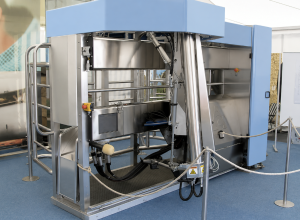
Automatic milking systems have changed how dairy producers think about feeding. In conventional parlors, nutrition is largely a group exercise: cows receive a total mixed ration designed to meet the needs of an average animal. In robotic milking systems, feeding becomes individualized, dynamic, and closely tied to cow behavior. The robot does not just milk cows; it depends on feeding strategy to function efficiently.
Research and applied field experience from sources such as the Journal of Dairy Science (Bach. 2017), University of Wisconsin Extension, and Dellait (Diaz-Royon, and Garcia. 2020) consistently show that nutrition in robotic systems is no longer just about meeting requirements. It is about balancing intake, motivating voluntary cow traffic, and optimizing milk production without compromising efficiency.
Feeding as a behavioral tool
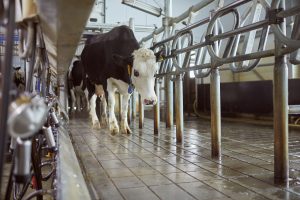
One of the most important shifts in robotic dairies is that feed drives cow movement. In these systems, cows choose when to be milked, and concentrate offered in the robot becomes the primary incentive. Bach highlighted that concentrate allocation is not simply nutritional supplementation but a management tool that regulates visit frequency and milking intervals.
If too much energy is supplied in the partial mixed ration at the bunk, cows have little motivation to visit the robot. The result is fewer milkings per day and lower milk yield. On the other hand, if the ration is too restrictive, cows may increase visits but risk losing body condition or experiencing metabolic stress. The feeding system must therefore create a controlled “pull effect,” encouraging cows to visit the robot regularly while maintaining adequate total nutrient intake.
Field observations summarized by Dellait reinforce this concept. Farms that successfully manage robotic systems often target moderate nutrient density in the bunk ration while reserving a portion of energy intake for the robot concentrate. This balance promotes consistent traffic without excessive reliance on fetched cows.
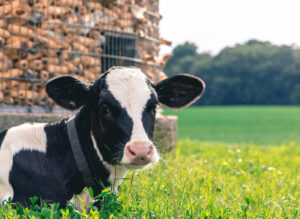
The challenges become even more pronounced in grazing-based robotic systems, where feed is no longer fully controlled and cow movement depends on pasture allocation and distance to the robot. In these systems, feeding plays an even stronger role as a behavioral driver, as cows must be motivated to leave the paddock and visit the robot voluntarily. Studies have shown that pasture-based robotic dairies can achieve similar levels of productivity and profitability compared with conventional systems, but only when robot utilization and pasture efficiency are optimized. Higher capital and maintenance costs in robotic systems further increase the importance of maximizing milk harvested per robot. In this context, feeding strategy, whether through concentrate allocation or pasture management, becomes central to both biological performance and economic return (Garcia. 2020).
Precision feeding and nutrient partitioning
Robotic systems also bring the industry closer to true precision feeding. Individual cows can receive different amounts of concentrate based on milk yield, stage of lactation, or parity. This allows for better alignment between nutrient supply and requirements compared with traditional group feeding.
The University of Wisconsin Extension work emphasizes that despite this technological advantage, the fundamentals of rumen function remain unchanged. Fiber adequacy, rumen degradable protein, and overall diet structure still govern intake and performance. Poorly balanced rations cannot be corrected by robot feeding alone.
What changes is the ability to fine-tune energy delivery. High-producing cows can receive more concentrate in the robot, supporting production without overfeeding the entire group. Lower-producing cows are not forced to consume excess nutrients, which can improve efficiency and reduce feed costs. However, this system requires careful calibration. Overfeeding concentrate in the robot can lead to substitution effects, reduced bunk intake, and potential rumen health issues.
Another important consideration is the interaction between protein and energy supply. Research has consistently shown that responses to increased protein are closely tied to energy intake. In robotic systems, where energy delivery is split between bunk and robot, this interaction becomes even more critical. Protein must be balanced not only for microbial synthesis and amino acid supply but also in the context of how energy is distributed across feeding locations.
Economics of feeding in robotic systems
Feeding strategy in robotic dairies has direct economic consequences. The cost of concentrate is typically higher than that of the partial mixed ration, and its use must be justified by increased milk production or improved robot efficiency.
Bach’s analysis demonstrated that feeding strategies that optimize cow traffic and milking frequency tend to improve overall system profitability. More frequent milkings generally increase daily yield, but only if cows maintain adequate intake and metabolic balance. The economic return is therefore a function of both production and feeding cost.
The economic risks of mismanaging protein supply are particularly important. Research evidence on dietary protein and cow performance illustrates that reducing protein to lower feed costs can backfire (Garcia. 2020). In that analysis, feed cost savings of approximately $0.87 per cow per day were more than offset by a loss of about $1.50 in milk income due to reduced production and body weight gain. The net effect was negative profitability despite lower ration cost.
This principle applies directly to robotic systems. If protein or energy is reduced excessively in the bunk ration, cows may increase robot visits temporarily but lose production, body condition, or both. Conversely, overfeeding nutrients at the bunk can reduce robot visits and underutilize the system’s capacity. The economic optimum lies in a narrow range where intake, production, and cow traffic are all aligned.
Dellait’s review of North American data further supports this balance. Typical robotic herds achieve around three milkings per cow per day with moderate concentrate allocation. Deviations from this balance, either through excessive bunk feeding or insufficient robot incentive, tend to reduce system efficiency and profitability.
Integrating biology, management, and technology
The success of feeding programs in robotic dairies depends on integrating biological principles with management and technology. The rumen still dictates how nutrients are processed, and inadequate fiber, imbalanced protein, or poor diet formulation will limit performance regardless of automation.
At the same time, robotic systems introduce new variables that must be managed. Cow behavior, traffic patterns, and individual feeding responses become central to system performance. Nutritionists and producers must think beyond nutrient requirements and consider how feeding decisions influence cow movement and robot utilization.
The most successful systems are those that maintain a consistent, well-balanced bunk ration while using robot concentrate strategically to fine-tune intake and behavior. This approach supports both production and efficiency without compromising animal health.
Take-home messages
Robotic milking systems transform feeding from a group-based exercise into an individualized, behavior-driven strategy that directly influences cow traffic and milking frequency.
Concentrate offered in the robot is not just a nutrient source but a management tool, and its allocation must be carefully balanced with the partial mixed ration to maintain intake and rumen health.
Reducing dietary protein or energy to cut feed costs can negatively impact milk production and profitability, as biological responses often outweigh savings in ration cost.
The optimal feeding strategy in robotic systems integrates nutrition, cow behavior, and economics, ensuring that cows are motivated to visit the robot while maintaining high levels of production and efficiency.
The full list of references used in this article is available upon request.
© 2026 Dellait Knowledge Center. All Rights Reserved.