
Álvaro García
The economics of modern dairy farming are changing rapidly. For decades, most breeding decisions on dairies focused exclusively on milk production and replacement heifer supply. Today, however, producers are operating in a much more complex economic environment, where every pregnancy has financial consequences extending far beyond the milking parlor.
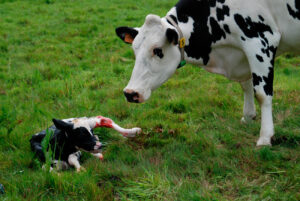
Strong beef prices in the United States, rising heifer rearing costs, and advances in reproductive and biological technologies are forcing producers to rethink traditional herd management strategies. A male calf is no longer simply a by-product of milk production. It can represent either a costly inefficiency or a valuable revenue opportunity, depending on how the herd is managed.
At the same time, modern technologies are making it possible to identify superior heifer calves earlier and with greater precision. This combination of market opportunity and technological advancement has created what could be described as a new dairy management triad: strategic use of sexed semen, targeted beef-on-dairy crossbreeding, and metabolomics-based animal selection.
Together, these approaches offer a pathway toward greater biological efficiency and improved profitability. More importantly, they allow producers to align reproduction, genetics, and economics into a single coordinated system.
Producing only the replacements you actually need
One of the largest hidden costs on many dairies is the overproduction of replacement heifers. Historically, many farms bred most or all cows to dairy semen simply to ensure enough replacements were available. The result was often an excess of heifers that consumed feed, labor, housing, and capital long before entering the milking herd.
The ability to generate a much higher proportion of female calves allows producers to become far more selective about which animals contribute future replacements. Instead of producing replacement heifers from average or below-average cows, dairy genetics can be concentrated in the top-performing segment of the herd. This approach accelerates genetic progress while simultaneously reducing unnecessary heifer inventory and creating flexibility to use beef semen on the remainder of the herd.
The economic implications are significant. Raising a replacement heifer commonly costs well over $2,000 before she enters the milking herd, and every unnecessary heifer represents capital tied up in feed, facilities, labor, and health costs without generating immediate income. For this reason, the key management principle is straightforward: replacement heifers should be produced intentionally, not incidentally.
Efficient herds increasingly determine how many replacements are truly needed based on culling rate, reproductive performance, and herd expansion goals, and then allocate sexed semen strategically to the animals most likely to produce profitable daughters. Research has shown that combining sexed dairy semen with beef semen can improve overall herd profitability, particularly in herds with strong reproductive performance and lower replacement requirements.
Beef-on-dairy: Turning low-value calves into Profit Centers
Once replacement needs are covered, the remaining pregnancies become an opportunity rather than a liability. This is where beef-on-dairy crossbreeding has transformed the economics of dairy reproduction. For many years, dairy bull calves carried low market value, but that situation has changed. Today, dairy-beef cross calves are commanding significantly higher prices, driven by strong beef demand and tighter national cattle inventories.
The market has responded quickly. Feedlots and beef processors increasingly recognize that well-designed beef-on-dairy cattle can deliver desirable carcass characteristics, improved feed efficiency, and consistent performance. As a result, calf sales, once viewed as a secondary income stream, are now becoming an important contributor to overall farm revenue.
Success in beef-on-dairy programs depends heavily on sire selection. The goal is not simply to use any beef bull, but to select genetics that complement dairy cows while minimizing calving difficulty. Producers are placing greater emphasis on calving ease, growth performance, carcass merit, and feed efficiency, ensuring that the resulting calves meet both production and market expectations.
This approach fundamentally changes the economic role of reproduction in the dairy herd. Rather than generating low-value surplus dairy calves, producers can market higher-value beef-cross animals while reducing unnecessary replacement costs. The full benefit, however, comes from integrating this strategy with the use of sexed semen. The best cows generate replacement females, while lower genetic-merit or later-lactation animals produce valuable beef-cross calves, allowing every pregnancy to contribute more directly to farm profitability.
Metabolomics: Choosing the right females earlier
The third component of the management triad represents an emerging opportunity to improve selection decisions earlier in life. Metabolomics, the study of small molecules associated with metabolic processes, provides insight into an animal’s physiological status, including energy balance, health, and reproductive function.
In dairy cattle, metabolomic research is increasingly identifying biomarkers associated with traits such as feed efficiency, metabolic resilience, fertility, and disease risk. While still developing for routine on-farm use, these tools have the potential to complement genomic information by providing a more dynamic view of how animals perform under real biological conditions.
From a management perspective, the value of metabolomics lies in improving which animals are selected to contribute to the next generation. Rather than raising all heifer calves and making decisions later, producers may be able to identify high-potential animals earlier and focus resources accordingly. This supports more precise decisions regarding:
- Which females are selected to produce replacement heifers
- Which heifers should be retained in the herd
- Which pregnancies are better directed toward beef production
- Which animals are unlikely to justify long-term investment
In this context, sexed semen becomes a tool used after selection decisions are made. It ensures that the most suitable females produce daughters, while the remainder of the herd can be managed to generate higher-value beef-cross calves.
Metabolomics and related precision technologies may help dairy producers better understand the relationship between metabolism, health, and long-term animal performance, reinforcing the role of biological data in improving efficiency and profitability (Garcia, 2025).
Although still evolving, these approaches point toward a future in which fewer animals are raised, but those retained are better aligned with both biological performance and economic return.
The economics producers care about
For dairy producers, the value of this management triad comes down to economics. The system works because each component reinforces the others. Sexed semen reduces unnecessary replacement costs, beef-on-dairy crossbreeding increases calf revenue, and metabolomics improves the accuracy of selecting which animals justify long-term investment.
Consider a herd producing more heifers than it needs. Those excess animals consume feed, occupy facilities, require labor, and increase overall operating costs without generating immediate returns. By aligning replacement numbers with actual herd requirements, producers can redirect resources toward more profitable areas of the operation. At the same time, beef-cross calves can generate greater revenue than traditional dairy bull calves, and when this advantage is applied across the entire herd, the financial impact becomes significant.
Metabolomics has the potential to strengthen this system further by helping producers avoid investing in animals with lower biological potential. Raising fewer but higher-quality replacements improves overall herd efficiency while reducing long-term costs. The broader implication is that profitability is no longer determined solely by pounds of milk shipped, but by how efficiently the herd converts feed, genetics, reproduction, and management into marketable value. The dairies most likely to succeed will not be those producing the most animals, but those producing the right animals.
Conclusion
The dairy industry is moving toward a more integrated and economically focused approach to herd management. Strategic use of sexed semen, beef-on-dairy crossbreeding, and metabolomics-based selection are not isolated technologies. Together, they form a coordinated management system designed to improve efficiency, reduce waste, and increase profitability.
The underlying philosophy is straightforward: produce only the replacement females truly needed, maximize the value of all remaining pregnancies, and use emerging biological tools to make better selection decisions earlier in life.
In a market environment where margins remain tight and efficiency matters more than ever; this management triad may represent one of the clearest pathways toward a more profitable and sustainable dairy industry.
The full list of references used in this article is available upon request.
© 2026 Dellait Knowledge Center. All Rights Reserved.