
Álvaro García
Historical foundations of milk safety
The history of milk and dairy product processing is inseparable from the work of Louis Pasteur, whose experiments in the mid-nineteenth century established the role of microorganisms in food spoilage and disease. Prior to the introduction of pasteurization, milk-borne disease outbreaks were common, particularly among infants and young children. Mortality rates associated with contaminated milk in urban centers were substantial, reflecting both limited refrigeration and widespread adulteration.
Building on Pasteur’s discoveries, Nathan Straus initiated one of the earliest large-scale public health interventions by supplying pasteurized milk to low-income families in New York City during the 1890s. The results were dramatic: within a decade, infant mortality declined markedly, demonstrating the effectiveness of heat treatment as a preventive measure. These successes culminated in the first compulsory milk pasteurization law, enacted in Chicago in 1908, and eventually in widespread adoption of pasteurization throughout the United States.
Mandatory pasteurization led to a sustained decline in milk-borne diseases, transforming milk from a common vehicle of infection into one of the safest widely consumed foods. This achievement remains one of the clearest examples of evidence-based food safety policy.
Re-emergence of raw milk–associated outbreaks
Despite these historical successes, recent decades have witnessed renewed interest in raw milk consumption, driven by perceptions of naturalness, taste, and health benefits. From 1973 to 1992, milk-borne outbreaks in the United States averaged approximately 2.4 cases per year. Between 1993 and 2006, outbreaks more than doubled to an average of 5.2 per year, with raw milk products responsible for most cases and hospitalizations.
Contemporary surveillance confirms that this trend has persisted. Analyses covering the period from 2009 onward demonstrate that raw milk and raw milk dairy products continue to be associated with a disproportionate share of dairy-related foodborne outbreaks. While only an estimated 1–2% of the U.S. population reports consuming raw milk at least monthly, raw milk accounts for a higher proportion of outbreaks and hospitalizations relative to pasteurized dairy products. Children and adolescents are consistently overrepresented among cases, raising public health concern.
A notable example occurred in 2012, when a multistate Campylobacter outbreak linked to raw milk from a Pennsylvania dairy resulted in more than 70 confirmed cases. Such outbreaks are not isolated incidents but rather predictable outcomes of consuming an unpasteurized biological product.
Pathogens of concern in modern dairy systems
Campylobacter
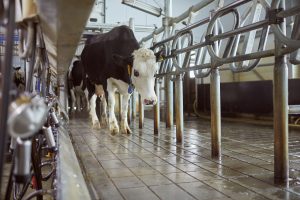
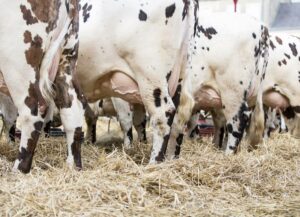
Campylobacter species are among the most prevalent foodborne pathogens associated with raw milk. They are common inhabitants of the intestinal tract of cattle and other animals and are shed in feces in large numbers. National Animal Health Monitoring System (NAHMS) studies consistently show that over 90% of U.S. dairy farms harbor Campylobacter, with approximately one-third of cows shedding the organism at any given time. These findings indicate that Campylobacter presence on dairy farms is not sporadic but endemic.
Salmonella
Although less prevalent than Campylobacter, Salmonella remains a major public health concern. NAHMS data indicate that the proportion of dairy farms with at least one Salmonella-positive cow increased between the mid-1990s and 2007, with cow-level prevalence increasing 2.5-fold. These trends reflect changes in herd size, housing systems, and manure management practices over time.
Shiga toxin–producing Escherichia coli.
Shiga toxin–producing E. coli, including E. coli O157:H7, continues to be detected on dairy farms at increasing frequency. Surveillance data show rising prevalence at both the farm and cow levels. While adult housing systems may influence exposure, evidence suggests that early-life factors play a critical role in establishing long-term pathogen carriage.
Colostrum management and long-term pathogen risk
Classic experimental work demonstrated that colostrum intake profoundly influences intestinal integrity and bacterial translocation in neonatal calves. Calves deprived of colostrum or exposed to contaminated colostrum exhibited increased recovery of E. coli from mesenteric lymph nodes, whereas calves receiving high-quality colostrum prior to exposure showed effective protection against bacterial dissemination.
These findings remain highly relevant in modern dairy systems. Poor colostrum hygiene or feeding unpasteurized waste milk to calves can establish early-life pathogen reservoirs that persist in adulthood. Consequently, pathogen prevalence observed in adult cows may reflect management decisions made during the first hours of life rather than recent exposure alone.
Pasteurization and milk nutritional quality
Pasteurization is a time–temperature treatment designed to eliminate pathogenic microorganisms while preserving milk’s nutritional value. Numerous studies have evaluated the effects of pasteurization on bioactive milk components, including lactoferrin, lactoperoxidase, lysozyme, immunoglobulins, bacteriocins, oligosaccharides, and vitamins.
Standard pasteurization has been shown to retain substantial biological activity in these components. Claims that pasteurized milk lacks nutritional or immunological value are not supported by scientific evidence. Even heat-sensitive nutrients such as vitamin C, which milk is not a major dietary source of, experience minimal losses during pasteurization. Overall, pasteurization provides substantial safety benefits with negligible nutritional compromise.
Producer perceptions and on-farm practices
Surveys indicate that raw milk consumption remains common among dairy farm families, often driven by taste preference and convenience. Producers unaware of foodborne pathogens are significantly more likely to consume raw milk. At the same time, a paradox exists within the industry: larger dairies increasingly pasteurize milk fed to calves, recognizing the clear benefits for animal health.
Research consistently shows that calves fed pasteurized milk exhibit improved growth rates, reduced morbidity, and lower mortality compared with calves fed raw waste milk or milk replacer. These findings underscore an important inconsistency between practices adopted for animal health and attitudes toward raw milk consumption by humans.
Emerging risks and contemporary relevance
Recent detection of highly pathogenic avian influenza A (H5N1) virus in dairy cattle in the United States has further highlighted the importance of pasteurization as a robust food safety barrier. Regulatory and experimental evaluations confirmed that standard pasteurization effectively inactivates the virus, reinforcing the resilience of existing milk safety systems against emerging zoonotic threats. This event illustrates that pasteurization protects not only well-established bacterial pathogens but also against unforeseen biological hazards.
Conclusions
Modern dairy farms are cleaner and better managed than at any point in history; however, they remain biologically complex environments in which pathogenic microorganisms are endemic. Improvements in hygiene and management reduce pathogen loads but do not eliminate risk. Raw milk consumption therefore represents a predictable and preventable public health hazard.
Pasteurization remains one of the most effective food safety interventions ever developed, preserving milk’s nutritional quality while protecting consumers from disease. While individuals may choose what they consume, those choices should be informed by scientific evidence rather than perception. Loss of public trust in milk safety would have consequences not only for consumers but also for dairy producers and industry. Careful consideration of the risks associated with raw dairy product consumption is essential for protecting both public health and the long-term sustainability of the dairy sector.
The full list of references used in this article is available upon request.
© 2026 Dellait Knowledge Center. All Rights Reserved.