
Álvaro García
When people think of the plants that accompanied European explorers and settlers to the Americas, wheat, olives, grapes, and sugarcane usually come to mind. Few realize that another plant quietly traveled alongside them, eventually becoming one of the most useful resources on farms throughout Latin America. That plant was giant reed (Arundo donax).
Known locally as carrizo, caña, caña brava, or cana-do-reino, giant reed has been part of the rural landscape from Mexico to Argentina for centuries. It has served as a living fence, windbreak, construction material, a support for climbing crops, an emergency livestock feed, and even the raw material for musical instruments. Because it became so common, many people now assume it is native to the Americas. It is one of agriculture’s oldest traveling companions.
A plant older than history
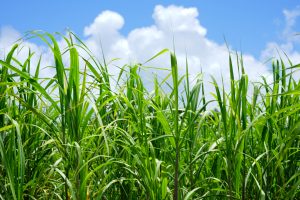
Despite its resemblance to bamboo, giant reed is a perennial grass belonging to the Poaceae family. Its exact origin remains uncertain, although botanists place it somewhere between the eastern Mediterranean and western or central Asia, with origins extending into the Middle East and the Indian subcontinent. Because people have cultivated and transported the species for thousands of years, identifying its original natural distribution has become impossible.
Long before the Age of Exploration, giant reed was already deeply integrated into Mediterranean civilizations. Ancient Egyptians, Greeks, and Romans used it to build roofs and walls, reinforce irrigation canals, weave baskets, make fishing poles and walking staffs, manufacture writing pens, and produce the reeds used in musical instruments. Few plants offered such versatility, making giant reed an indispensable component of everyday rural life.
Crossing oceans and building farms
When Spain and Portugal expanded into the Americas during the fifteenth and sixteenth centuries, they brought much more than livestock and crop seeds. They also introduced practical plants that made farming possible. Giant reed was one of them.
Unlike many grasses, Arundo donax rarely reproduces through viable seed. Instead, it spreads entirely by stem fragments and underground rhizomes. A few cuttings were enough to establish an entire stand, making it an ideal companion for settlers establishing new farms.
Once introduced, the plant spread rapidly along irrigation canals, riverbanks, roadsides, and field boundaries. Today it grows throughout much of Latin America, southern Europe, North Africa, the Middle East, Asia, Australia, New Zealand, and North America. It is now present on every inhabited continent except Antarctica, a remarkable global distribution achieved primarily through human activity rather than natural seed dispersal.
The original multi-purpose farm material
Long before steel fencing, PVC pipe, treated lumber, or synthetic building materials became widely available, giant reed served as one of agriculture’s most versatile renewable resources.
Farmers used it to establish living fences and windbreaks, construct livestock corrals, build roofs and temporary shelters, support beans, tomatoes, grapes, and other climbing crops, protect young fruit trees, and weave baskets and wall panels. Its hollow stems are exceptionally light while providing remarkable strength, and unlike timber, the plant regenerates rapidly after harvesting.
Beyond agriculture, giant reed has also played an important cultural role. The reeds used in clarinets, saxophones, oboes, bassoons, and many traditional wind instruments are still manufactured primarily from Arundo donax. The same plant that fenced fields and sheltered livestock has also shaped the sound of orchestras around the world.
Livestock value
Although giant reed is not considered a premium forage comparable to alfalfa or high-quality temperate grasses, livestock have browsed it for generations. Goats readily consume the young shoots and leaves, sheep graze fresh regrowth, and cattle often utilize leafy material during periods when other forages become scarce. As stems mature, they become increasingly fibrous and lignified, reducing digestibility, but regular cutting stimulates the production of younger, more nutritious growth.
Young leafy material contains moderate concentrations of crude protein together with appreciable amounts of potassium, calcium, magnesium, and other minerals. Consequently, giant reed should be viewed as a supplemental or emergency forage rather than a primary feed source. Like many crop residues and perennial grasses, its nutritional value depends on the stage of maturity at harvest.
Where giant reed fits as a feed resource
One of the most common misconceptions about giant reed is comparing it with high-quality forages such as alfalfa or perennial ryegrass. Such comparisons are inappropriate because giant reed occupies quite a different nutritional niche. It is better evaluated alongside fibrous feeds and agricultural residues commonly used in ruminant diets to provide effective fiber, stretch forage inventories, or serve as emergency feed resources.
Compared with these feeds, giant reed contains more crude protein than wheat straw, rice straw, or sugarcane bagasse, while offering digestibility like corn stover or sugarcane tops when harvested at an early stage of growth. As with all fibrous feeds, maturity has a profound effect on nutritional value. Delayed harvest increases lignification, reducing fiber digestibility and energy availability. Earlier harvesting or repeated cutting improves feeding value.
Table 1. Typical composition and digestibility of giant reed compared with selected fibrous feed resources.
Feedstuff |
DM |
CP |
NDF |
ADF |
ADL |
Ash |
OMD* |
|
|
(% as fed) |
(% DM) |
|||||
Giant reed, fresh |
29.8 |
11.1 |
66.6 |
40.4 |
7.6 |
11.4 |
58.4 |
Wheat straw |
91.0 |
4.2 |
77.5 |
50.0 |
7.2 |
7.7 |
45–50 |
Rice straw |
92.8 |
4.2 |
69.1 |
42.4 |
4.8 |
18.1 |
45–55 |
Corn stover |
85–92 |
4–9 |
60–75 |
35–50 |
4–8 |
5–10 |
50–60 |
Sugarcane tops, fresh |
26.8 |
4.9 |
67.7 |
39.2 |
5.6 |
7.7 |
50–60 |
Sugarcane bagasse, dehydrated |
92.5 |
2.0 |
81.7 |
53.0 |
10.6 |
5.7 |
45.5 |
*OMD = organic matter digestibility in ruminants. Values are representative of averages or broad literature ranges and can vary with maturity, plant fraction, processing, chemical treatment, and analytical method.
Giant reed occupies an intermediate position among these fibrous feeds. Its crude protein concentration is higher than that of wheat straw, rice straw, sugarcane bagasse, and sorghum straw, while its fiber concentration remains high. When harvested as young leafy growth, its digestibility may compare favorably with several crop residues. As the plant matures and lignification increases, however, its feeding value declines rapidly. For that reason, giant reed is best viewed as a supplemental or emergency roughage rather than a substitute for high-quality forage.
Table 2. Practical feeding characteristics of giant reed compared with common fibrous feed resources
Feed |
Typical CP |
Main limitation |
Typical use |
Giant reed |
Low |
Increasing lignification with maturity |
Emergency forage, chopped roughage, silage |
Wheat straw |
Very low |
Low digestibility |
Fiber source in TMR |
Rice straw |
Very low |
High silica |
Maintenance diets, treated straw |
Corn stover |
Low to moderate |
Variable quality |
Beef and dairy roughage |
Sugarcane tops |
Low |
Seasonal availability |
Fresh or ensiled forage |
Sugarcane bagasse |
Extremely low |
Very low digestibility |
Effective fiber after processing |
Sorghum stover |
Low |
Variable maturity |
Beef and dairy roughage |
A modern comeback
Interest in giant reed has grown once again, not because of its historical importance, but because of its extraordinary productivity. Researchers are evaluating it as a renewable source of biomass for bioenergy, advanced biofuels, paper pulp, biodegradable building materials, carbon sequestration, erosion control, and wastewater treatment through constructed wetlands. Unlike annual biomass crops, giant reed can remain productive for many years after establishment while producing exceptional dry matter yields with modest inputs.
Like many successful species, giant reed has a complicated legacy. Farmers value it as a renewable source of fencing, construction materials, livestock shelter, and emergency forage. Ecologists, however, recognize that dense stands can displace native vegetation, alter wildlife habitat, increase fire risk, and modify river ecosystems. Consequently, Arundo donax is classified as an invasive species in several countries.
This dual identity illustrates an important lesson in agriculture: the value of a species often depends on where it grows and how it is managed. A plant that has supported farming for centuries may require careful stewardship when it escapes into natural ecosystems.
For centuries, giant reed quietly accompanied human civilization. It crossed oceans with explorers, helped establish farms on new continents, sheltered livestock, strengthened homes, supported crops, inspired music, and today may contribute to a more sustainable bioeconomy. Its story reminds us that some of agriculture’s most important plants are not necessarily the crops we harvest, but the humble species that quietly helped make farming possible.
The full list of references used in this article is available upon request.
© 2026 Dellait Knowledge Center. All Rights Reserved.