
Álvaro García
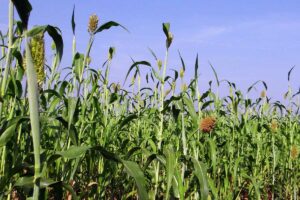
In many parts of South Asia, including India and Pakistan, farmers face a common challenge: seasonal shortages of good-quality forage. When grasses dry out or lose their nutritional value, cattle productivity drops, milk declines, body condition worsens, and calves get a weaker start.
This is where browse trees come in. Unlike grasses, tree leaves often remain green and nutritious even in dry conditions. One such tree, locally known as Sajna or Sohanjna, is gaining attention worldwide not just from farmers but also from researchers. Moringa oleifera is proving to be a reliable, low-cost feed that can support both animal health and farm productivity.
When pasture turns brown
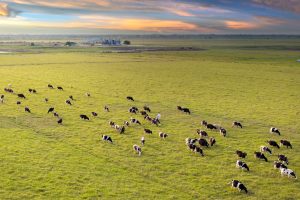
Every year, the same cycle repeats across much of South Asia. As the dry season sets in, pastures lose their color, and their feeding value. Grasses become fibrous, protein levels fall, and what once sustained milk production becomes little more than a rumen filler. Milk yield drops, body condition declines, fertility decreases, and calves perform poorly.
Farmers adapt as they always have, crop residues, purchased feeds, whatever is available. But these are often just temporary solutions. What is needed is something more dependable: a feed that retains its value when everything else declines, and that is where Moringa oleifera can help.
Moringa looks like just another browse tree. Nutritionally, it is something else entirely. Its leaves usually contain over 25% crude protein on a dry matter basis, placing it closer to a concentrate than a forage. Fiber levels are moderate and more digestible than mature grasses, allowing animals to extract more usable nutrients. What makes Moringa particularly valuable is the combination of high-quality protein, dense mineral supply, and natural bioactive compounds.
This combination shifts from simply filling the rumen to supporting real biological output be it milk, immunity, or calf growth. Moringa delivers near-concentrate protein levels with forage-like flexibility, while maintaining high digestibility, even under harsh conditions.
Table 1. Typical nutrient composition (Dry Matter Basis) |
||||
|---|---|---|---|---|
Feed |
Protein (%) |
NDF (%) |
Digestibility (%) |
Key advantage |
Mature grass hay |
6–10 |
60–70 |
45–55 |
Widely available |
Crop residues |
3–7 |
65–75 |
40–50 |
Low cost |
Alfalfa hay |
18–22 |
40–50 |
60–70 |
High-quality forage |
DDGS |
27–30 |
25–35 |
High |
Concentrated protein |
Moringa leaves |
22–30 |
20–35 |
65–80 |
Protein + digestibility + bioactivity |
Effects on colostrum quality
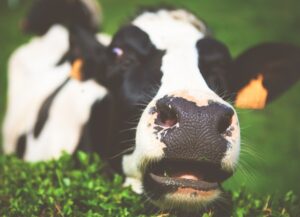
One of the most important benefits of Moringa appears before lactation begins. Research (Kekana et al., 2022) showed that cows supplemented prepartum produced higher-quality colostrum, improving immunity transfer to calves. This is no small advantage; it is foundational since a calf’s future is shaped in its first hours of life. Better colostrum means stronger immunity, lower disease risk, and higher calf survival.
Moringa supports this process by providing high-quality protein necessary for immunoglobulin synthesis, along with antioxidants that enhance immune function and a rich supply of minerals that help stabilize metabolism during the critical pre-calving period. In this way, it functions not merely as a feed, but as a targeted nutritional intervention applied before calving.
Effects on milk production
During lactation, Moringa’s effects are consistent: more milk, better efficiency, improved condition (Sahu et al. 2023). The reason however is not just “more protein.” Part of Moringa’s protein escapes rapid breakdown in the rumen, allowing more amino acids to reach the intestine. At the same time, its plant compounds improve microbial efficiency, helping cows convert feed into energy more effectively. As a result more nutrients are absorbed, there is less waste, and more milk per unit of feed This becomes especially important in systems where feed quality, not quantity, is the limiting factor. For all its nutritional advantages, Moringa’s real strength is practical.
It grows in heat. It tolerates dry periods. It can be harvested multiple times per year. It fits easily into smallholder systems, along borders, in small plots, or as dedicated fodder banks. In addition feeding it requires no complexity since it can be fed as fresh leaves, dried leaf meal or mixed into existing diets. Moringa is not a replacement for the entire ration, but it is a powerful nutritional upgrade to what is already there.
The take-home message
As climate variability increases, pasture-based systems are coming under growing pressure, with longer dry seasons and declining forage quality becoming the norm rather than the exception. In this context, Moringa offers something increasingly valuable: stability. It allows farmers to maintain nutrient supply during periods of shortage, reduce reliance on purchased feeds, and protect both milk production and calf health. In a changing environment, that kind of reliability is just as important as yield.
Moringa oleifera is unusually effective, and it works because it combines high nutrient density, with good digestibility, and functional biological effects. Few feeds deliver all three in a form that is affordable, adaptable, and farmer-friendly.
The full list of references used in this article is available upon request.
© 2026 Dellait Knowledge Center. All Rights Reserved.