
Álvaro García
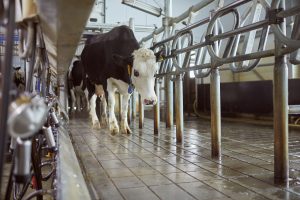
Automatic milking systems (AMS), driven by technologies from companies such as Lely and DeLaval, have fundamentally redefined how feeding, milking, and cow behavior interact on modern dairy farms. In conventional systems, feeding is designed primarily to maximize intake and support production within a fixed routine. In AMS, however, cows determine when they are milked, and nutrition becomes a central lever for guiding that behavior.
This shift transforms feeding from a static input into a dynamic management strategy. The objective is no longer simply to meet nutritional requirements, but to align energy supply, rumen function, and cow motivation in a way that supports both production and efficient robot utilization.
Feeding system architecture: PMR and robot concentrate
The defining feature of AMS nutrition is the intentional division of the ration into two components: a partial mixed ration (PMR) delivered at the feed bunk and a concentrate supplement dispensed through the robot.
The PMR forms the nutritional foundation of the system. Built around high-quality forages, typically grass and maize silage, it provides the bulk of dry matter intake, accounting for 70–85% of total nutrients. Unlike a total mixed ration, however, it is deliberately formulated to be nutritionally incomplete, covering maintenance and a substantial portion of milk production while leaving a controlled energy deficit.
That deficit is strategically filled through the robot concentrate feeding. Concentrate is delivered individually during milking visits and adjusted according to milk yield, stage of lactation, and cow performance. Beyond its nutritional contribution, it acts as a behavioral driver, encouraging cows to visit the robot voluntarily and frequently.
Rumen fermentation of dietary carbohydrates produces VFAs, with propionate as the main precursor of blood glucose for lactose synthesis and milk yield, while acetate and butyrate support milk fat synthesis. Bypass starch provides limited intestinal glucose. Microbial and bypass protein supply amino acids for milk protein synthesis. Hindgut fermentation contributes minimally.
Formulating diets for AMS requires careful redistribution of nutrients across the PMR and robot feed. The PMR must provide sufficient physically effective fiber (NDF) to maintain rumen stability and stimulate rumination, while also supplying moderate energy density. If it becomes too energy-rich, cows lose incentive to visit the robot. If it is too restrictive, intake and production suffer.
Robot concentrate must be equally well controlled. Typical allocations range from 2 to 6 kg per cow per day, although higher-producing herds may exceed this range. A key challenge is managing the substitution effect, where increased concentrate intake reduces PMR consumption. Excessive reliance on robot concentrate can disrupt rumen fermentation and increase the risk of disorders such as subacute ruminal acidosis.
Research comparing PMR formulations shows that forage-to-concentrate ratios typically range between approximately 64:36 and 54:46. These differences influence intake patterns, rumen function, and milk yield potential, reinforcing the importance of maintaining balance rather than maximizing any single dietary component.
Behavioral and technological integration
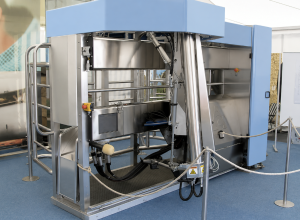
A defining strength of AMS lies in the integration of feeding with real-time data. Systems such as the Lely Astronaut allow concentrate allocation to be tailored to individual cows, adjusting dynamically based on milk yield, lactation stage, and visit frequency.
This creates a feedback loop in which nutrition directly influences behavior. Cows that are appropriately incentivized visit the robot more frequently, increasing milking frequency and stabilizing production. At the same time, feeding strategies must be continually adjusted based on system performance, reinforcing the dynamic nature of AMS nutrition.
The central challenge in AMS feeding is achieving equilibrium between three interconnected goals: milk production, rumen health, and robot efficiency. Increasing energy supply can boost production but may reduce cow traffic or destabilize rumen function. Restricting energy can improve robot visits but limit performance.
High-performing European AMS systems, particularly in countries such as the Netherlands and Ireland, demonstrate how this balance can be achieved. These systems emphasize forage digestibility, controlled starch levels, and precise concentrate allocation. The objective is not to maximize individual inputs, but to optimize the overall system response, ensuring consistent intake, stable rumen conditions, and efficient robot utilization.
AMS ration example
To illustrate how these principles are applied in practice, consider a high-producing Holstein herd averaging 40 L of milk per cow per day in a free-traffic AMS system.
In this scenario, the PMR would typically be formulated to support 30–33 L of milk, intentionally leaving a gap to be filled through robot feeding. A representative PMR on a dry matter basis might consist of 35–40% maize silage, 25–30% grass silage, 8–12% haylage or alfalfa, 10–15% cereal grains, 6–10% protein sources such as soybean or rapeseed meal, and a small proportion of minerals and additives.
Nutritionally, this would correspond to roughly:
- 16–17% crude protein
- 32–35% NDF
- 20–24% starch
The remaining production would be supported through robot concentrate allocation, typically ranging from 4 to 7 kg per cow per day at this level of performance. Fresh cows and high producers would receive the highest allocations, while later-lactation cows would receive less.
Crucially, the robot concentrate is designed to complement rather than replace the PMR. Increasing concentrate supply must always be evaluated in the context of total intake, as excessive robot feeding can reduce forage consumption and compromise rumen health.
Economics of AMS feeding
Consider a farm operating two robots with 120 lactating cows, averaging 40 L per cow per day. Total milk production would reach approximately 4,800 L/day, equivalent to 2,400 L per robot per day. This represents a strong level of robot utilization and highlights the importance of maintaining consistent cow traffic.
From an economic perspective, the challenge is to optimize the balance between PMR and robot concentrate. Robot feed is typically more expensive per unit of energy, meaning that excessive reliance on concentrate can erode margins. At the same time, insufficient concentrate reduces robot visits, lowering milking frequency, and total milk output.
The most profitable systems therefore focus on:
- Maximizing milk yield per robot per day
- Maintaining high forage utilization through quality PMR
- Using robot concentrate strategically to sustain cow traffic.
Rather than maximizing concentrate intake or individual cow output, economic success in AMS depends on system efficiency, where feeding supports both biological performance and machine utilization.
Practical implications and applications
Implementing effective AMS feeding requires continuous monitoring and adjustment. Key indicators include robot visits per cow, PMR intake, milk yield trends, and signs of rumen instability. Feeding strategies must remain flexible, adapting to changes in production, forage quality, and cow behavior.
For those seeking further refinement, detailed ration formulations and European AMS models provide valuable guidance. These systems demonstrate how precise control of forage quality, nutrient balance, and concentrate allocation can be translated into consistent performance under commercial conditions.
Take-home messages
- AMS feeding relies on a split ration system, combining PMR and robot concentrate.
- The PMR supports rumen health and baseline production, while robot feed drives behavior and performance.
- Maintaining the correct balance is essential to avoid reduced intake, metabolic issues, or poor robot utilization.
- Feeding strategies must be dynamic and individualized, supported by real-time data.
- Profitability depends on optimizing milk output per robot, not simply maximizing concentrate use.
The full list of references used in this article is available upon request.
© 2026 Dellait Knowledge Center. All Rights Reserved.