
Álvaro García
Access to pasture allows cows to express species-typical behaviors with a freedom rarely achieved indoors. Grazing cows walk greater distances, explore their environment, and allocate time more flexibly across grazing, ruminating, resting, and social activities. When given a choice, they frequently prefer the outdoors, particularly during temperate conditions. These preference reflects motivations that extend beyond nutritional needs; the opportunity to graze, to select preferred forages, and to engage with a dynamic environment appears rewarding to them.
Behavioral evidence suggests that grazed cows tend to be calmer, exhibit fewer signs of frustration, and maintain more stable social hierarchies. Occasional displays of play behavior, light running, bucking, or energetic trotting, offer additional insight into their positive internal state. Reductions in vocalizations and greater behavioral consistency further support the impression that pasture contributes to emotional stability.
Physical health benefits
The health advantages of grazing have been well documented, particularly when cows have access to dry, well-maintained pastures. Natural soils and vegetation provide a more forgiving surface than concrete, contributing to lower rates of lameness and claw horn lesions. However, prolonged exposure to muddy conditions and poorly maintained tracks, especially those containing stones or gravel, can soften the hoof horn and increase susceptibility to white line disease, bruising, and other lesions. Thus, the hoof-health benefits of grazing depend heavily on paddock drainage and laneway quality. Ruminal function is often more stable under high-forage diets, and cows experience fewer disruptions associated with subacute ruminal acidosis or reduced fiber intake. Udder health may benefit as well, as open-air environments can reduce exposure to certain pathogens when paddock conditions are well maintained.
Across a cow’s lifetime, these advantages accumulate. Grazing cows often exhibit clearer estrous expression, lower culling rates for health-related causes, and longer productive lifespans. Although peak daily milk yield may be slightly lower than in high-input housed systems, lifetime milk production and overall biological efficiency are often competitive or superior.
Challenges and environmental variability
While pasture-based dairies offer clear welfare strengths, they are not without their challenges. Heat stress emerges as a significant risk in regions with high summer temperatures, affecting feed intake, rumination, and milk yield, and potentially undermining both welfare and productivity. Mud, rainfall, and cold stress can likewise create welfare concerns when shelter or drainage is insufficient. Forage quality fluctuates seasonally, and without adequate supplementation or rotational grazing, cows may experience nutritional shortfalls.
These challenges emphasize that grazing is not a welfare guarantee but a management-dependent system in which careful planning, shade structures, water availability, laneway maintenance, and strategic supplementation, plays a decisive role.
A systematic look at 25 years of welfare research
A recent analysis of 678 peer-reviewed studies published between 2000 and 2024 offers a comprehensive view of how dairy welfare research has evolved in grazing systems (Verdon et al. 2025). Studies were categorized according to the Five Domains framework and grouped by animal class: preweaning calves, weaned youngstock, and lactating cows.
The Five Domains Framework groups welfare into four functional domains: nutrition, physical environment, health, and behavioral interactions, which represent the external, human-managed conditions affecting the animal. These domains describe aspects of welfare that can be observed, measured, and modified by people. The fifth domain, mental or affective state, differs in that it reflects the animal’s own experience of those conditions. In this sense, the first four domains can be viewed as determinants of welfare from a management perspective, whereas the fifth domain captures the animal’s well-being, integrating into how it subjectively perceives and responds to its environment. This distinction helps clarify that good welfare requires not only appropriate physical conditions but also positive affective experiences.
Trends and imbalances in the welfare research landscape
Research examining welfare in pasture-based dairy systems expanded steadily from 2000 to 2019 and accelerated markedly after 2020, with more than 60 relevant publications produced annually in recent years. Most of this work focused on lactating cows, which accounted for approximately three-quarters of all studies, indicating a strong bias toward the milking herd. In contrast, calves and weaned youngstock—despite their foundational importance for long-term productivity and welfare—received much less scientific attention.
Geographically, New Zealand and the European Union dominated early contributions to the literature, reflecting their long-standing pasture-based dairy sectors. More recently, however, research output from South American countries has increased, signaling both the expansion of grazing dairy systems and growing global engagement with welfare standards.
This expanding body of work is characterized by a clear imbalance across welfare domains. Health-related topics, such as lameness, infectious disease, parasitism, and metabolic disturbances, appeared in more than half of all studies, underscoring the sector’s historical focus on mitigating negative outcomes and addressing conditions that directly affect productivity. Nutrition, behavior, and environmental factors were examined more intermittently, while direct assessment of mental or affective states was entirely absent. Only a small number of studies employed cognitive bias testing, judgment tasks, or reward-anticipation measures to explore how animals experience their environments emotionally.
Together, these trends reveal a research landscape that has broadened over time but remains uneven, with considerable opportunity to integrate affective science, early-life stages, and underrepresented welfare domains into future grazing-system research.
Calves: Persistent vulnerabilities and emerging themes
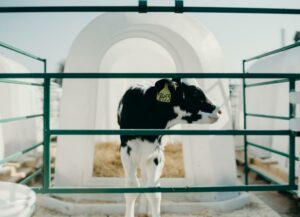
Research on preweaning calves reveals a long-standing concern with passive immunity and colostrum management. Across multiple countries, failure of passive transfer remains common, driven by seasonal calving patterns, labor constraints, and reliance on spontaneous suckling. Despite decades of research, farm-level adoption of best practices remains variable.
In contrast, recent years have seen a surge of interest in extended cow–calf contact systems. These systems improve growth and behavioral development but raise new questions regarding milk allocation, udder comfort, and the emotional consequences of scheduled separations. The literature suggests strong potential benefits but also underscores the need for commercial-scale trials and context-specific management guidelines.
Beyond colostrum and cow–calf systems, major gaps remain. Little is known about how to design enrichment for large, stable group pens typical of seasonal grazing herds. Milk feeding practices for competitive group environments are poorly researched, and optimal group size remains unclear. Long-term effects of early-life environments on cognition, emotional resilience, and adult performance also require careful study.
Compared with calves and cows, weaned heifers and dairy-beef animals remain understudied. Historically, research focused on parasitic infections and their effects on growth and fertility. More recent studies highlight the growing problem of anthelmintic resistance, emphasizing the need for targeted treatments and improved diagnostic tools.
The review points to deeper gaps: basic documentation of everyday young stock management practices is limited, mental state assessments are absent, and few studies explore how early-life experiences shape resilience during the transition to milking. Understanding how these animals cope with changes in diet, social structure, and handling could offer significant welfare and productivity benefits.
Lactating cows: Deep evidence and new frontiers
The lactating cow has been at the center of pasture-based welfare research for over two decades. Early studies consistently demonstrated strong motivation for cows’ pasture access and documented the health and behavioral benefits of grazing compared with confinement. Lameness received extensive attention, highlighting risk factors such as rainfall, laneway design, handling practices, and yard surface quality.
More recently, technological innovation has reshaped the research landscape. Wearable sensors, machine-learning tools for early disease detection, and virtual fencing systems now occupy a significant share of literature. The promise of virtual fencing is especially notable, offering opportunities for more precise grazing management and landscape stewardship. Preliminary findings suggest it can be welfare-compatible when implemented with well-designed training protocols, though long-term impacts remain uncertain, particularly in large herds and dynamic grazing allocations.
Environmental and nutritional variability remain central welfare concerns. Climate change is intensifying heat stress, while fluctuating forage supply complicates nutritional management. Research on shade, shelter, and heat mitigation is growing but still insufficient relative to the scale of the challenge. Similarly, technologies designed to estimate individual pasture intake need stronger validation, particularly regarding their ability to reflect hunger and satiety.
Insights and remaining challenges
Across all cattle classes and welfare domains, the most striking finding of the 25-year literature review is the near absence of research into mental states. While behavioral and physiological measures are widely used, direct assessments of positive or negative affective experience are rare. This omission stands in contrast to contemporary welfare frameworks, which emphasize the importance of positive experiences and psychological well-being.
Research gaps persist for other reasons as well. Grazing systems are inherently variable, making large, controlled experiments difficult to conduct. Funding structures often prioritize short-term, economically relevant topics over exploratory work on behavior, cognition, or resilience. Technologies that promise improved welfare may inadvertently reduce human–animal interaction, raising concerns about stockmanship and fear responses.
Despite these challenges, the expanding body of research reveals a sector increasingly committed to understanding welfare in all its complexity.
Looking forward: Toward a more balanced welfare science
The next generation of welfare research in pasture-based systems will need to move beyond disease mitigation toward a more holistic understanding of well-being. Calves require research into enriched environments, practical group-feeding innovations, and the long-term implications of extended suckling. Young stock warrant attention to their daily management, cognitive development, and resilience. Lactating cows will benefit from innovations in shade, shelter, and heat mitigation, as well as refined tools for evaluating hunger, satiety, and emotional valence. Across all stages, the integration of technologies that support, rather than replace, skilled stockmanship will be essential.
Most importantly, research must begin to address affective experience, the emotional lives of grazing cattle. Without this dimension, assessments of welfare remain incomplete.
Conclusion
Pasture-based dairy systems offer cows a way of living that closely aligns with their evolutionary biology. When well-managed, they support natural behavior, reduce stress, strengthen hoof and metabolic health, and promote longer, more productive lives. The scientific literature has grown dramatically over the past 25 years, yet important imbalances remain. Calves and young stock need deeper attention, the mental-state domain has been overlooked, and the growing challenges of climate change demand fresh solutions.
Advancing welfare in grazing systems will depend on sustained investment in rigorous, context-specific research that considers both biological needs and emotional experiences. With thoughtful design and a balanced research agenda, grazing dairies can continue to serve as systems in which animals thrive, landscapes are sustained, and the dairy industry remains resilient for the decades ahead.
The full list of references used in this article is available upon request.
© 2026 Dellait Knowledge Center. All Rights Reserved.